


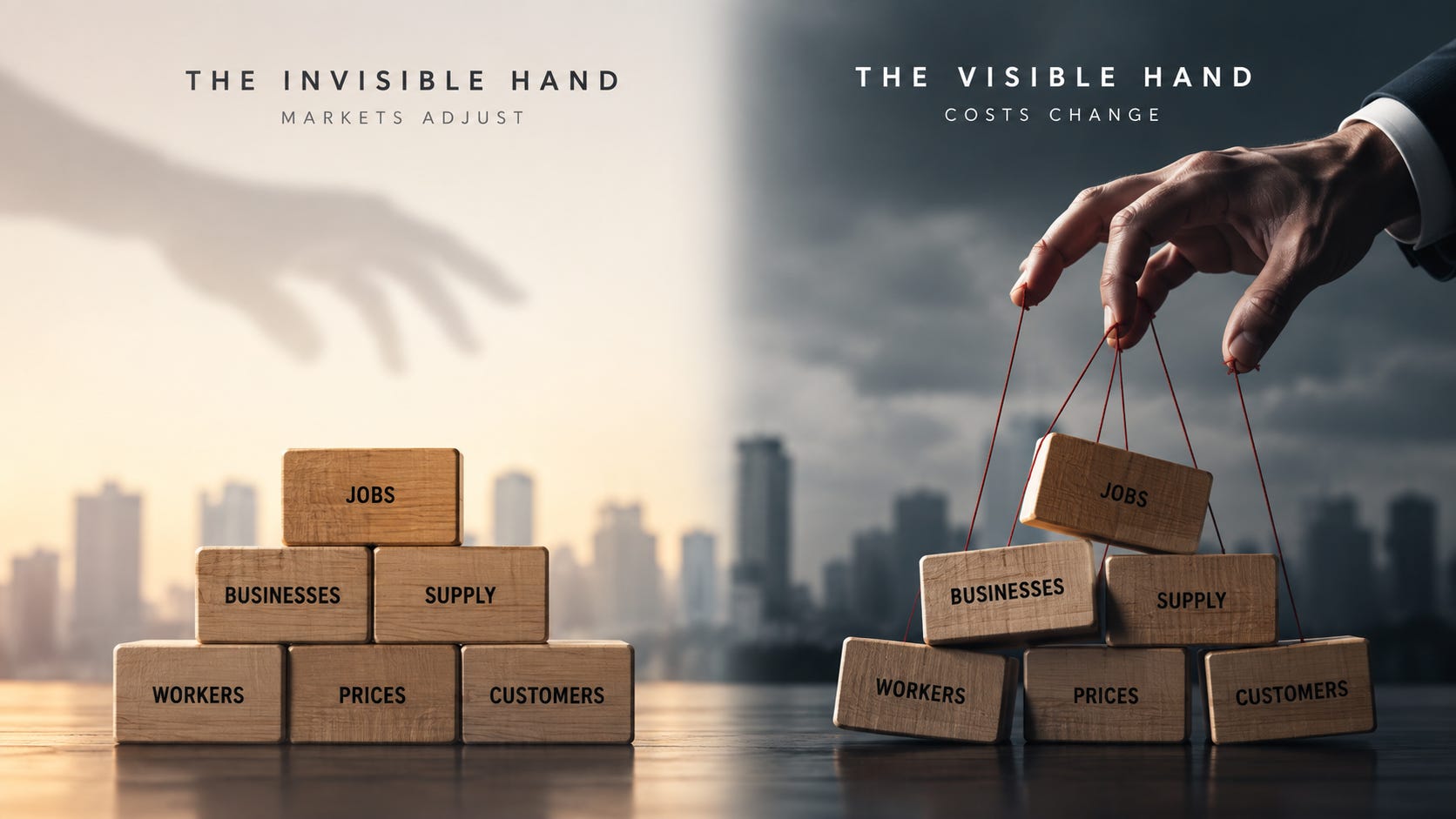
One of the greatest advantages of doing business in the United States has always been institutional trust… if you have ever done business elsewhere you know USA is the best country to do business in the world.
That doesn’t mean businesses agree with every law, regulation or administration. It means that, generally speaking, we believe the rules mean something.
If the government issues a permit, you make investments around it. If an employee presents federal authorization allowing them to work, you hire and train them. Companies invest on the assumption that contracts, permits and government authorizations will retain some continuity from one administration to the next.
That predictability, that stability, is an economic asset. I am genuinely worried that we are underestimating what happens when we start losing it.
This is where the immigration conversation has become very real… and while today we are talking immigration this also applies to alliances, tariffs and plenty of other subjects.
This is not another political piece about immigration. My personal beliefs are almost irrelevant here. The rules are the rules. Employers have a responsibility to verify that the people they hire are authorized to work.
The problem starts when employers and employees follow the rules, make real economic decisions based on what the government tells them, and then the rules change.
That is no longer just an immigration problem.
It is a trust problem.
And trust has a price.
Put yourself in the shoes of the hiring manager
A few Friday nights ago, ICE was on Coral Way, one of the busiest streets in Miami.
They were in unmarked vehicles, I watched from the windows as they came in and out of restaurants and made arrests. This was on a Thursday night, a busy night for any restaurant.
Whatever your position on immigration enforcement, put yourself in the shoes of the hiring manager responsible for staffing the business.
You have employees who have worked in this country for years. Some have attorneys, pending asylum cases, work permits or other federal employment authorization. You reviewed their documentation when they were hired. They are on payroll.
And now some of them are afraid to come to work because the cook next door was arrested and, from what they heard, he had “papers” to work.
What exactly do you tell them?
“Don’t worry. You’re fine.”
Can you guarantee that?
I can’t.
One of the better cooks who worked in one of our kitchens was detained. He had an attorney, immigration paperwork and employment authorization that we had verified. He was on payroll and paying taxes.
Eventually, he had a decision to make: remain detained, spend money on attorneys and wait for his case to work through the system, or leave the country.
He left, he called to say "I’m not a criminal and I’m not going to remain locked up while someone else decides my future”. Last we heard, he is now somewhere in Guatemala.
There are details about his case that I don’t know. From the perspective of running a food company, however, the outcome was simple.
We lost a really good cook.
For that week, and for the couple of weeks that followed, management had to step deeper into the kitchen. Service on the floor suffered. Productivity suffered. We lost economic value.
Companies plan around the rules too
I am not talking about a visa or temporary program reaching a clearly stated expiration date. Businesses can plan around dates.
I am talking about the government creating a legal pathway, telling people they can enter and work under certain conditions, issuing the documentation, and then changing those conditions after people and businesses have already made decisions around them.
Take the CHNV humanitarian parole program for Cubans, Haitians, Nicaraguans and Venezuelans.
Whatever you think of the policy itself, applicants needed a U.S. sponsor, went through screening and, if approved, could enter under federal parole and apply for employment authorization for periods that could run up to two years.
People planned around that. Businesses did too.
Then the current administration terminated the program and moved to end existing parole grants and the work authorization attached to them before many of those periods would otherwise have ended.
That isn’t theoretical in Miami.
Mango’s Tropical Cafe in Miami Beach lost around 10 employees in roughly two weeks after work authorization connected to humanitarian parole was revoked. Its HR director told the Miami Herald that E-Verify alerts began arriving telling the company that employees were no longer authorized to work. There was no grace period. The business suddenly had to remove trained performers, bartenders and servers and begin replacing them.
Think about that from the employer’s perspective. You hired through a federal program, checked the documents and trained the employees…. Then the government changed the answer.
Venezuelan TPS provides another example. In January 2025, DHS announced an 18-month extension that would have allowed eligible beneficiaries to retain TPS and work authorization through October 2, 2026. Weeks later, the new administration vacated that decision and subsequently terminated the 2023 designation.
Whether that reversal was justified is not the point. The business consequence is.
The business consequence is the point. When governments reverse decisions that companies and individuals have already relied upon, everyone becomes more cautious the next time. Expansion slows. Hiring slows. Training becomes a bigger risk.
That is where immigration policy becomes an institutional-trust issue.
And uncertainty itself becomes an input cost.
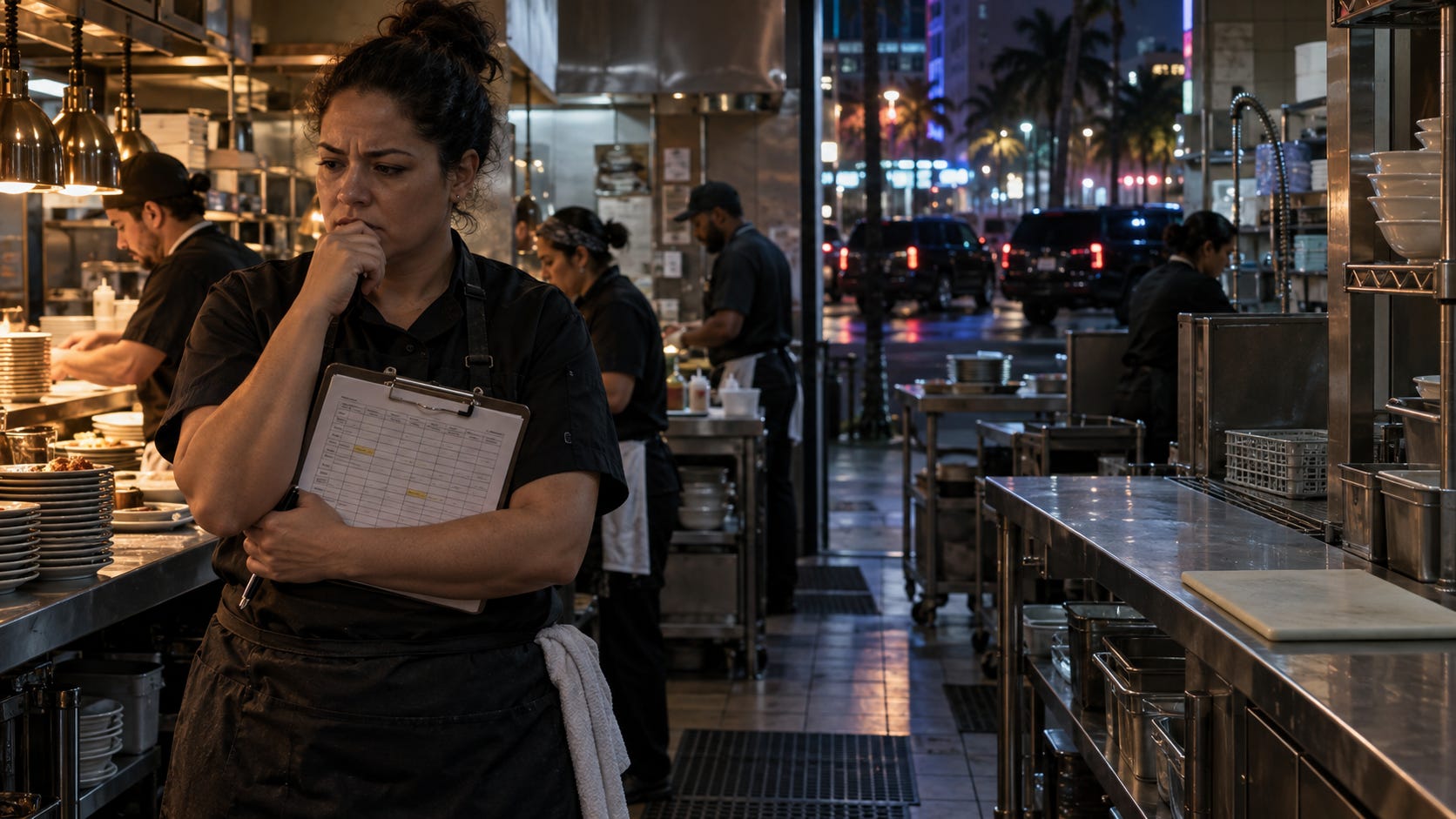
Uncertainty becomes an input cost
At Meat N’ Bone, we have already cancelled two events we used to participate in every year. Why? Uncertainty.
There are fewer people willing to work certain events. The third-party cooks we normally use are commanding roughly a 20% premium over last year. Once we account for the added staffing risk, the events no longer make economic sense.
So we decided not to participate.
We lose revenue. The event loses a vendor. The cooks lose shifts. Suppliers sell less product. The economy loses activity.
We are taught that a market economy is guided by Adam Smith’s “invisible hand.” But when uncertainty removes part of the available labor pool, that invisible hand becomes very visible.
Workers know there are fewer people willing to take certain jobs, and they respond rationally. They ask for more money. If fewer people will do the work, those who remain become more valuable.
For the employee, that is compensation for uncertainty. For the business, it is higher labor cost.
The National Restaurant Association reported earlier this year that 55% of surveyed operators had been negatively affected by recent immigration-policy changes; 25% reported greater difficulty hiring or retaining workers, and 18% said employees were not coming to work.
That is when an immigration issue becomes a labor issue, then a productivity issue, and ultimately a food-pricing issue.
Food prices are just inputs added together
We talk constantly about the price of beef.
Someone raises the animal. Someone works the ranch. Someone transports it. Someone processes it. Someone delivers it. Someone cooks it.
Every step is an input.
Finding people willing to do many of those jobs was already difficult. Reduce the labor pool or increase the premium required to attract workers, and another input gets more expensive.
Eventually the consumer pays.
And I’ll allow myself one policy observation.
The administration says it wants lower beef prices. On August 26, it increased the tariff-rate quota by 300,000 metric tons of imported lean beef trimmings to increase supply.
I understand the logic.
But if we genuinely want American beef to become more affordable, another lever is giving the farmers, processors, packers, distributors and sellers producing it confidence in the labor rules they operate under.
You cannot make one of the inputs required to produce American food less predictable and then be surprised when producing American food remains expensive.
That isn’t an argument against enforcement.
It is an argument for clarity.
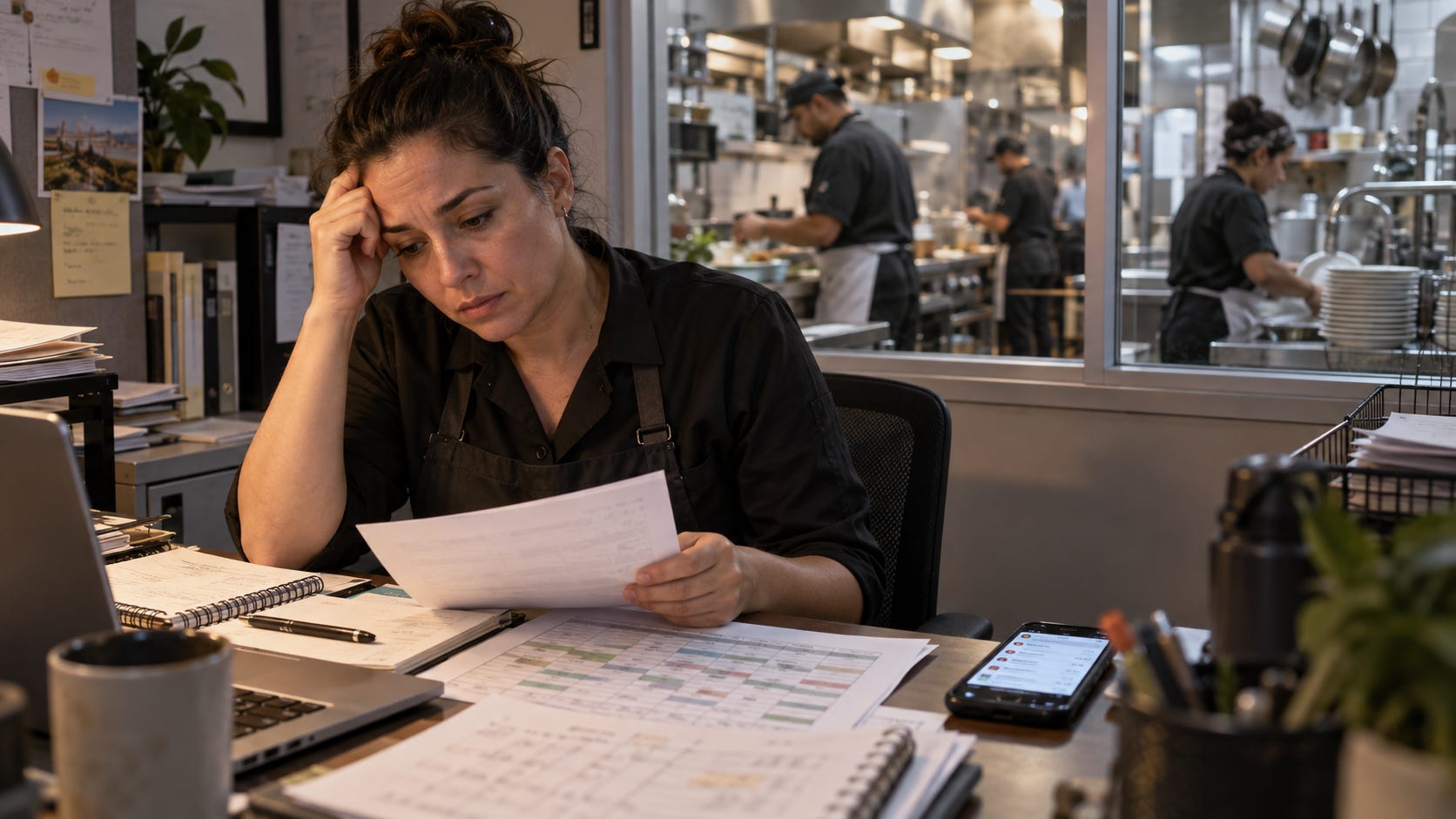
Even in the age of AI, somebody has to wash the dishes
We spend an extraordinary amount of time talking about AI and productivity. I use AI every day and believe it will transform almost every company. I used it to help me write this article.
But food remains a physical economy.
AI isn’t showing up at five in the morning to work cattle. It isn’t unloading every truck, processing every animal, running every grill station or cleaning the kitchen at midnight.(at-least not yet)
Even in the age of AI, somebody still has to wash the dishes.
Those people need rules they understand. So do the businesses employing them.
If someone’s work authorization is changing, communicate it clearly. If a program is ending, give employers reasonable time to adapt. If enforcement priorities change, explain what that means for workers and companies that followed the rules.
This should not require a political argument. It is a call for transparency, communication and predictability.
Because institutional trust is not abstract. It determines whether an employer invests in training, whether a restaurant accepts an event, whether a company opens another location and whether an investor puts capital to work.
Businesses can adapt to difficult rules. What is much harder is operating when you stop believing the rules are something you can plan around.
Once that trust disappears, the cost is much larger than the employee who doesn’t show up tomorrow.
It is the business that stops investing in next year. It is the investor who invests elsewhere.
Luis Mata
Luis Mata is the CEO and co-founder of Meat N’ Bone, CFO & Partner of Olos Impact, and partner of Standard & Scale. He writes about food, founders, capital, technology, and the operating systems behind growing companies.