



I used to walk into certain Miami restaurants and feel a nagging, intellectual confusion.
I wasn’t jealous. Okay, maybe a little jealous. Maybe I still am. But mostly I was confused. I was doing the math—and it didn’t add up.
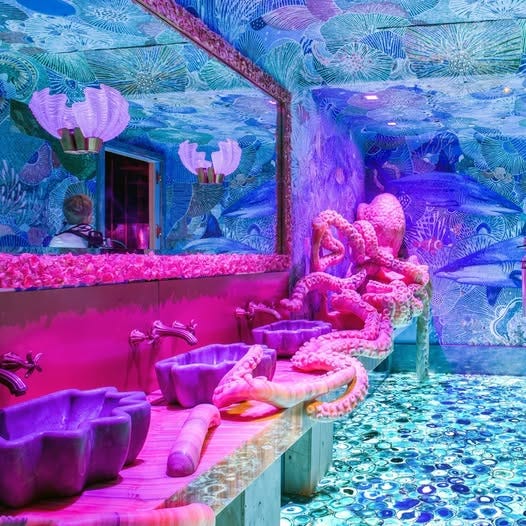
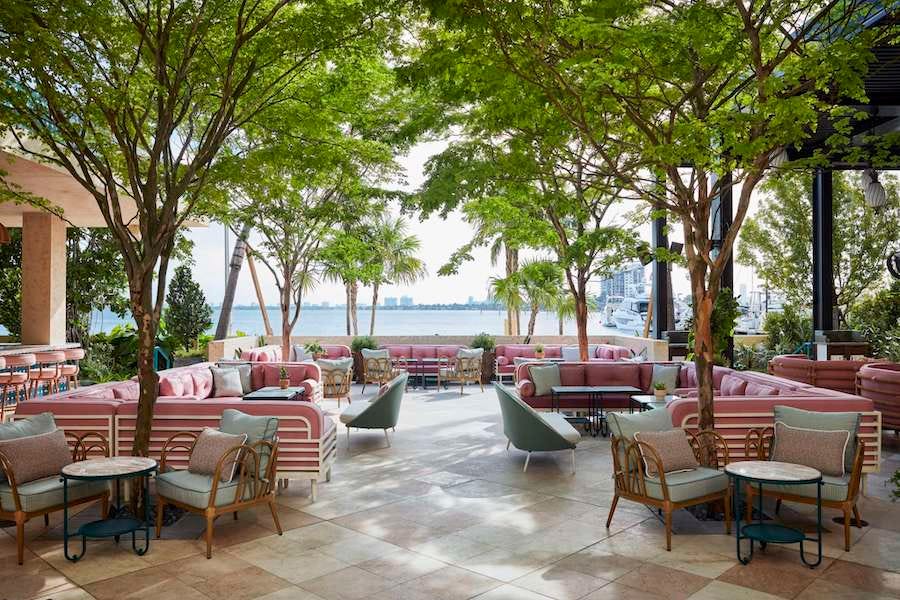
The rooms were cavernous. The finishes immaculate. The furniture looked imported from a designer’s fever dream. If you’ve seen the bathrooms at Sexy Fish, you know the genre. It’s not a restroom. It’s a capital allocation decision with mood lighting. Rumors peg that build-out north of $17M. Others—like Casadonna—are said to push past $20M.
Meanwhile, I was, and still am, at my desk counting weeks of runway. Renegotiating vendor terms. Weighing every “yes” against the brutal opportunity cost of cash. I kept asking the same question: How do they afford this? How does it make sense?
In Miami, the common explanation is a whisper about something shady. People call it laundering. They assume it’s a front for “someone’s money.”
But that never fit. At least not most of the time. These places are too public, too polished, too institutional. You don’t launder money by putting it under a spotlight in a global dining destination.
Then one day—scrolling restaurant headlines over an overpriced burger—it clicked.
It’s arithmetic.
They aren’t “affording” the build-out.
They’re trading a tax bill for an asset.
Profit Is an Expense
In high-level business, profit is often the most expensive line item in the building.
Not because profit is bad, but because profit is what gets taxed. At the corporate level, the federal rate is 21%. Take those profits home and you can hit a second layer, depending on structure. Most hospitality groups aren’t neat C-corps anyway; they’re pass-throughs, where the bite lands at the owner level and can feel like 30%+ before state taxes even enter the chat.
So when a well-capitalized operator has a monster year, they face a choice that sounds philosophical but is actually mechanical:
Do I cut a massive check to the IRS—or redeploy that cash into something the tax code rewards and has potential upside? After a well operated restaurant can make a LOT of money (look at Mila and Joes, both have grossed $50M+ per year)
The tax code isn’t neutral. It’s an incentive machine designed to push capital back into the economy. Learn how Section 179 and bonus depreciation work, and the speed of the spending starts to make sense.
One of my goals is to build a business large enough where I can do this. This is one of the things that make America great and our economy thrive. Yes, other countries have similar initiatives… but our execution is best.
The Discount Is Real—But It’s Not Free
This isn’t free money. It’s timing, qualification, and documentation.
Section 179 can allow immediate expensing of qualifying purchases, but it has limits and an income constraint—you generally can’t manufacture a loss out of thin air. Bonus depreciation is the bigger lever right now. For qualifying property acquired and placed in service after January 19, 2025, businesses can deduct 100% of the cost in the first year.
That one sentence explains a lot of “how are they doing this?”
Translate it from CFO-speak to real life:
The spend: a $1,000,000 check for equipment and build-out components that qualify.
The shield: the $1,000,000 becomes a deduction now or slowly over years, materially reducing tax liabilities.
The reality: at a 25% marginal bite, that million-dollar room can feel like $750,000 after taxes.
Same room. Same chandelier. Different arithmetic.
When the alternative to investing is losing a meaningful chunk of cash to the Treasury, spending $50,000 on a chandelier isn’t bravado.
It’s a hedge.
Access to Capital vs. Operational Excellence
This is where founders get tripped up. We see a $10M dining room and assume the person who built it is a better operator (they may be!). However, access to capital and operational excellence are different sports.
The capital game is defensive. It’s played with depreciation schedules, tax shields, and the ability to classify spend in ways the tax code treats kindly. Section 179 and bonus depreciation don’t explain every dollar—but they explain the incentive: move money into qualifying assets, fast.
The operator game is offensive. It’s played with labor, food cost, retention, and the grind of turning $1 into $5 just to survive.
When you’re bootstrapping a concept, you have to focus on being a great operator and being efficient with the little money you have. You can’t hide a mediocre steak behind an ego subsidy. You don’t have a tax shield big enough to catch you if service fails.
In the capital game, the room is the strategy.
In the operator game, the business is the strategy.
The Danger of the “Tax-Smart” Build
To outsiders, this can look like laundering. Money comes in, moves fast, and vanishes into physical stuff. The profit line shrinks while the room gets bigger.
But there’s a trap.
Tax efficiency is not business health. A room can be optimized for depreciation and still be a ghost town on a Tuesday night. I’ve seen owners confuse “having the capital to build it” with “having the demand to sustain it.” Depreciation doesn’t create demand. It changes timing.
Eventually the deduction is taken, the bonus is used, and you’re left with a massive, expensive machine that still has to satisfy customers.
That’s why I don’t look at those rooms the same way anymore.
When I see a $10M build-out, I don’t assume they’re smarter or more confident. I assume they’re playing a game where spending is sometimes cheaper than standing still.
They aren’t building monuments to success.
They’re building shelters for cash.
The Take
For the founder still counting runway: you’re not behind because your build-out is modest. You’re unencumbered.
Some restaurants are built because the market demanded them. Others are built because the tax code nudged them. Both serve food—but only one is an engine. The other is a shelter.
Know which one you’re building. You do not have to match the neighbors. You should do your own thing and do it well. That is how you win.
Quick note for the lawyers: this is about legal tax planning, not tax evasion. Outcomes depend on structure, qualification, and documentation. Talk to your CPA before you build a marble bathroom out of vibes.
I spend a lot of time thinking and writing about food, hospitality, tech, and capital. But none of that matters if you ignore the decision that actually shapes everything: who you decide to build with, and how you structure that relationship. Reach out to info@flavorsandfounders.com