


Two regulars walk into a restaurant on a random weeknight. Same seats. Same opener. The first drink lands on the table on pure muscle memory.
And then the night just… stalls.
No second round. The bread arrives and turns into table décor. When it’s time to order, it’s all protein. Light on sides. No cocktails. Dessert gets a clean, polite “we’re good.” Not even the ritual maybe we’ll split something. Just a full stop, like someone flipped a switch.
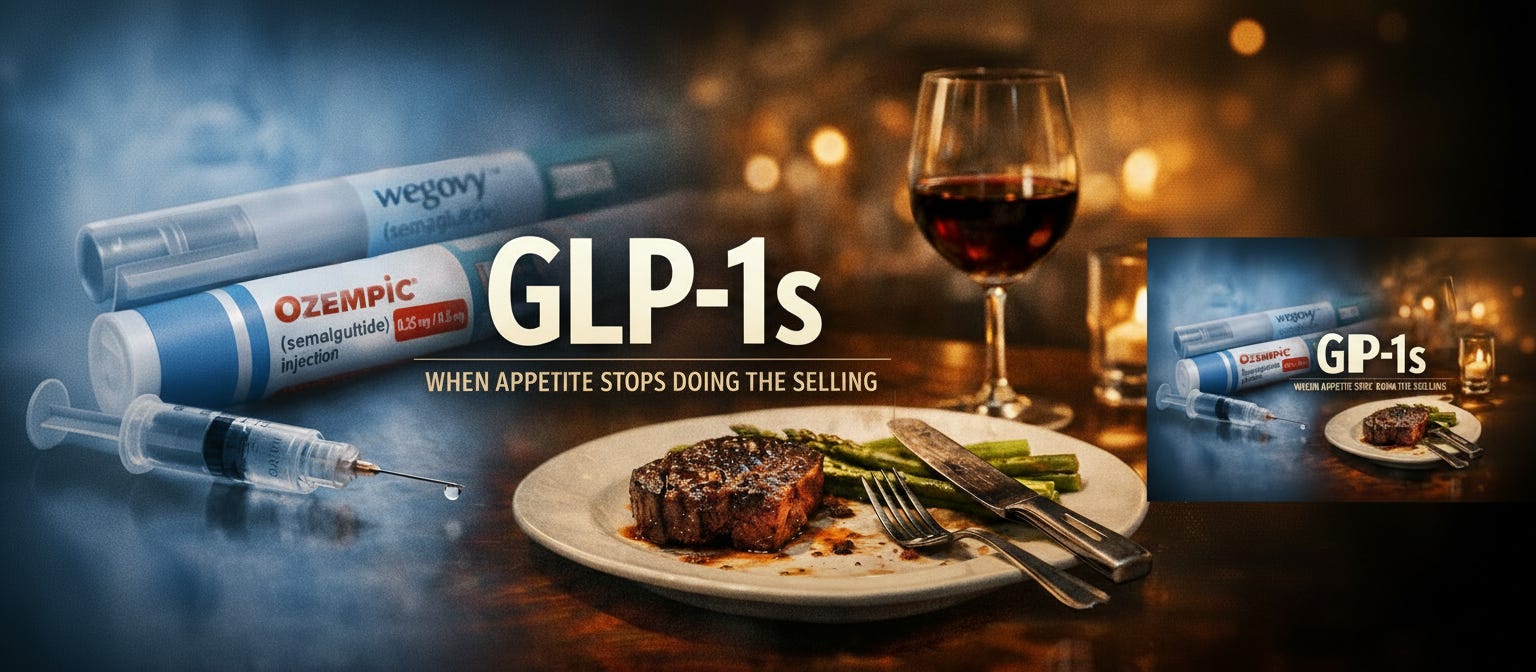
GLP-1 drugs like Ozempic are usually framed as a health story, sometimes a cultural one. For restaurants, they’re something simpler and more dangerous: a small change in physiology that creates big changes in behavior. These diners are not anti-restaurant and neither are the drugs. They are anti-autopilot. Expectations are changing and menus as well as operators need adapt.
The Add-On Economy Meets a Brake Pedal
A large part of the F&B industry still runs on momentum. One add-on becomes the next. A second drink because the plate is still half-full. A side because “we’re already here.” Dessert because “why not.” That model works when appetite is driving the room. GLP-1s turn the volume down.
Take liquor, the margin stabilizer for most restaurants: high margin, low labor, the quiet subsidy that keeps the math working when food costs rise and wages inflate. But the profitability isn’t the first drink. It’s velocity, the second cocktail, the bottle because it “pairs,” the third round because the night is humming. Mute appetite and that chain breaks more often. Guests still drink. They just do it more deliberately and more slowly. The bar doesn’t go empty. It thins. Note that this is a double whammy as the newer generation does not drink as much (more on this later).
This isn’t just vibes. A randomized clinical trial in JAMA Psychiatry found low-dose semaglutide reduced alcohol consumed in a lab self-administration setting and reduced alcohol craving among adults with alcohol use disorder. The point for operators is not that GLP-1s “cure drinking.” It’s that they appear to dampen reward-seeking, exactly where late-night beverage economics live.
Protein Wins Share When Appetite Shrinks
Here’s the twist: the same force that slows liquor often strengthens protein.
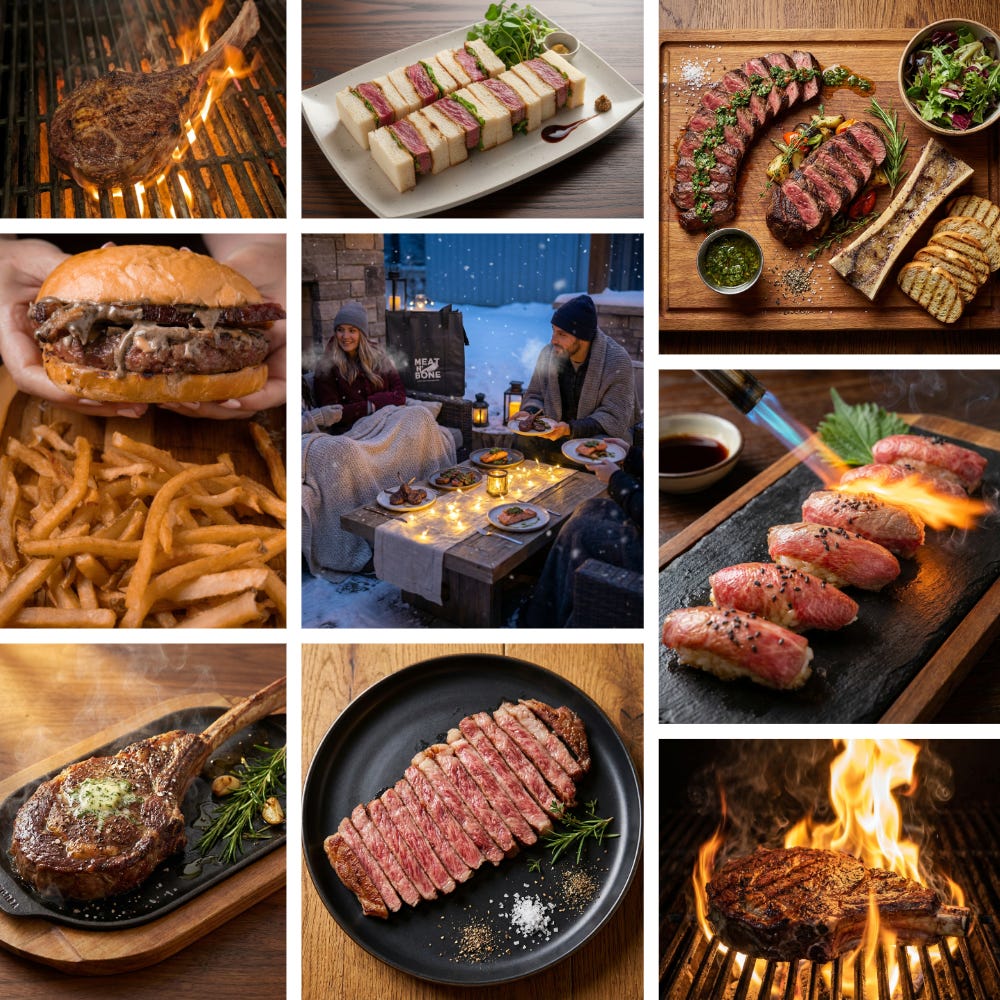
When people expect to eat less, they pick the part of the meal that makes stopping feel legitimate. Protein is satiety with good PR. It’s also the one part of the check that still feels like value when everything else is being questioned. If you’re not going to graze through three courses, you still want one decisive plate. In restaurants, decisive plates tend to be steak, chops, fish, shellfish, eggs—food that signals completion.
So in practice, GLP-1 behavior doesn’t always mean smaller checks. More often it means fewer line items. The table that used to spend by stacking appetizers, sides, and rounds now anchors the meal around one premium protein and lets everything else compete for relevance.
The broader spend data points in the same direction: impulse-heavy food occasions are the first to soften. Cornell researchers matched household transaction records with survey-confirmed GLP-1 use and found that within six months of starting, households reduced grocery spending by about 5.3% on average (more than 8% among higher-income households), while spending at limited-service restaurants fell about 8%. A separate working paper finds a similar 8% decline at fast-food/limited-service venues.
The MAHA Moment: Restraint Becomes Fashionable Again
This is where the cultural framing creeps in.
When Robert F. Kennedy Jr. talks about “Make America Healthy Again,” the messaging is essentially a pitch for restraint, less excess, fewer shortcuts, more intentional consumption. Strip away the politics and the overlap is hard to miss: GLP-1s are doing chemically what culture has struggled to do socially, which is to reduce overconsumption without asking people to white-knuckle it.
Restaurants are not responsible for public health. But they do sit downstream of consumer behavior. When restraint stops being a niche virtue and starts becoming mainstream default, the economics change.
The Cheesecake Factory Problem
No chain sits closer to the center of the GLP-1 debate than Cheesecake Factory.
Its model has long been a masterclass in abundance: encyclopedic menus, supersized portions, and a check quietly engineered around “might as well.” The first drink leads to the second. The appetizer happens because the menu invites browsing. Dessert is not an afterthought; it is a signature.
That’s why investors keep asking the question on calls, whether leadership is seeing any demand impact from obesity drugs.
To be fair, the pushback is reasonable: America has panicked before. Calorie labels did not kill indulgence. Big chains have survived nutrition disclosure, macro diet cycles, and every “people are finally eating clean now” narrative that comes around every few years. But GLP-1s are a different mechanism and GLP-1s will become more affordable and more mainstream with time, so leadership should read the warning sides and act accordingly.
The risk to Cheesecake Factory isn’t traffic collapsing. It’s conversion. Fewer automatic add-ons. Fewer impulse desserts. Slower beverage velocity. Dining rooms that still look full, but generate revenue with less momentum.
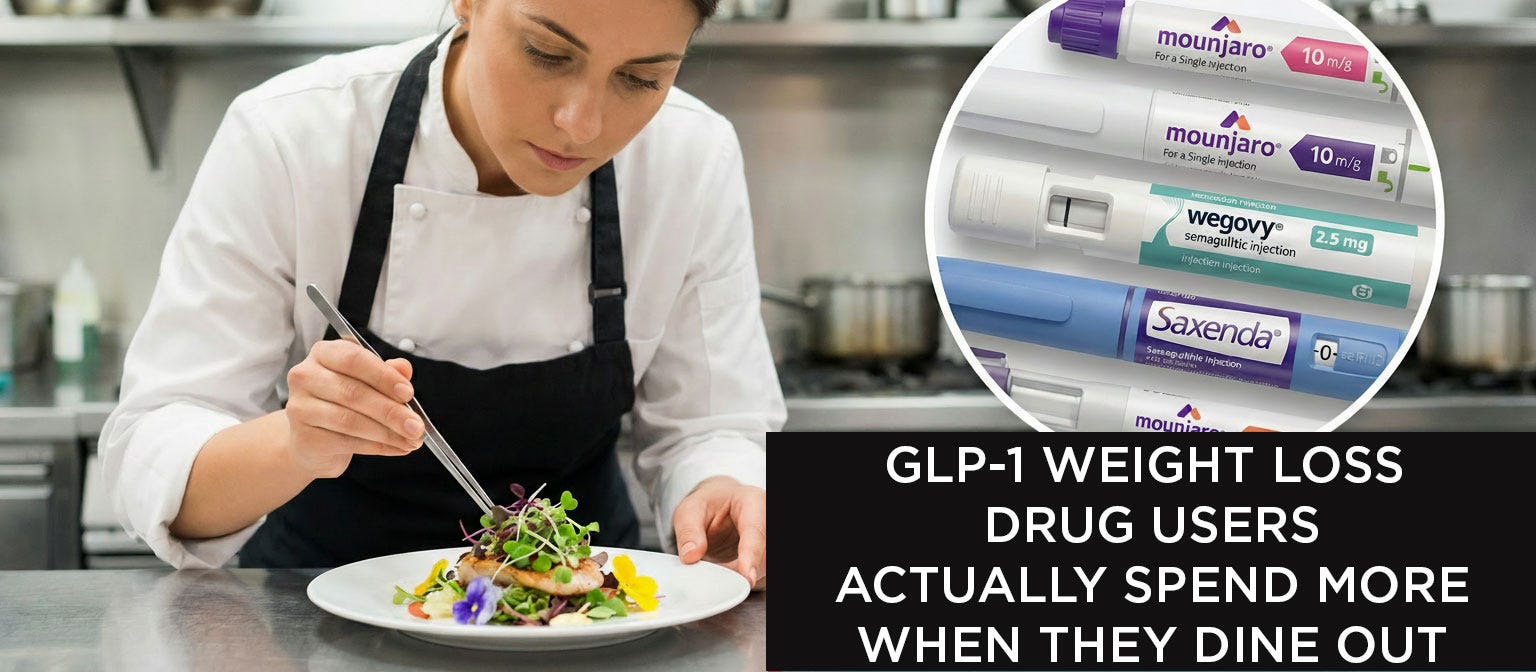
According to Bloomberg, GLP-1 drug usage has doubled from 6% in May 2024 to 12% by November 2025 and is expected to keep climbing as prices drop and alternatives expand.
While many GLP-1 users eat smaller portions or go out less often, their habits change once they do dine out. That change is already showing up at Darden Restaurants, the company behind Olive Garden, Cheddar’s Scratch Kitchen, and LongHorn Steakhouse.
The opportunity is also there, if the chain chooses to take it. GLP-1 diners don’t reject indulgence; they ration it. One decisive plate can replace three exploratory ones. Protein anchors become more valuable than menu breadth. Smaller-format indulgence—done intentionally rather than defensively, can preserve both satisfaction and margin. The abundance brand doesn’t have to disappear. It just has to learn how to sell “enough” without sounding like it’s apologizing.
The Investor Lens: It’s Not Traffic, It’s Mix
If you’re looking for a single clean metric, “guest counts” will lull you into complacency. The more meaningful shift is mix: fewer line items per cover, lower beverage velocity, less dessert attachment, more spending concentrated into the primary entrée, especially protein.
That mix shift changes how you should value concepts. The casual middle that relied on breadth, bundles, and habitual add-ons looks more fragile. Concepts that already sell a thesis, great protein, great seafood, a tight menu, a clean experience—look more insulated. In other words, GLP-1s don’t just pressure restaurant demand; they pressure the business models that monetize indecision.
My take on what operators do now
The smartest move for operators right now isn’t to redesign menus or chase a GLP-1 narrative. It’s to pay closer attention to the numbers you already have. GLP-1s don’t announce themselves in traffic or revenue. They show up in averages. If you are on top of your metrics you will be ahead of the curve.
Guest counts can stay flat while the economics underneath start to drift. Checks may not collapse; they will soften. Dining rooms may still feel full, but the mix quietly changes. Fewer items per table. Fewer second rounds. Cleaner “no dessert” decisions. More spend concentrated into the main plate. If you’re only watching covers and total sales, you’ll miss it.
What actually deserves attention is how the check is built. Items per cover. Beverage attachment. Second-round velocity. Dessert conversion. Time at table. These are the levers GLP-1 behavior touches first, and they’re the same levers most restaurants stopped obsessing over once the room filled back up post-COVID.
The danger is misdiagnosis. A softer bar night gets blamed on the bartender. A weaker dessert week gets chalked up to seasonality. A slightly lower average check gets dismissed as noise. But when those changes line up over weeks, not days, they’re telling you something structural is happening.
This is also where discipline matters. If portions are adjusted, do it intentionally and track guest response, not just food cost. If the beverage program evolves, measure satisfaction per pour, not just total alcohol sales. If you tighten the menu, watch whether clarity increases conversion on your core dishes.
None of this requires knowing which guests are on GLP-1s. You don’t need to ask. You don’t need to label. You just need to observe.
Because GLP-1s don’t create new problems. They remove the cushion that used to hide existing ones… and in a business where margins are made at the edges, losing that cushion without noticing is far more dangerous than the drugs themselves.
The Take
GLP-1s won’t empty dining rooms, in fact they can increase revenue. They’re a behavior change: subtle, but real. And as access expands and costs come down, you’re going to see more of it, even if it never becomes “everyone.”
The industry will adapt. It always does. In fact, plenty of European restaurants have operated forever with smaller portions and less emphasis on piling food high as a form of value. It’s cultural. In a weird way, GLP-1s may make America a little more “European” at the table… less about quantity, more about completion.
The hard part is what comes next for operators: when appetite stops doing the selling, restaurants are left with execution alone. Fewer bites mean higher standards. Fewer drinks mean less margin to hide behind. Excess, long confused with hospitality, becomes visible for what it is.
That’s uncomfortable for an industry built on abundance. It’s also clarifying. In a market where diners stop earlier, only restaurants that know exactly what they’re selling—and why—will feel complete.