


For the past decade, independent restaurants haven’t been beaten by better food.
They’ve been squeezed out by capital.
Across most major cities, the story is familiar: neighborhood spots replaced by multi-unit groups, backed by private equity or institutional money, armed with cheaper capital, professionalized ops, and the patience to lose money longer than any single operator can afford. What looks like “better execution” from the outside is often just a longer runway.
Technology played an uncomfortable role in that shift. The same tools that promised to “empower operators” often ended up rewarding scale instead—better purchasing leverage, tighter labor optimization across many units, better data feeding better decisions. If you could afford the systems, the integrations, and the people to run them, tech made you stronger.
Which is why, when someone says “AI will revolutionize restaurants,” my first reaction isn’t excitement. It’s suspicion.
AI could become the next accelerant for consolidation—another advantage layered onto groups that already have money, data, and margin for error. Or it could be the first shift that actually compresses the advantage of scale—not by making independents “smarter,” but by taking work off their plates. Less admin. Less chaos. Fewer decisions that require a full-time manager to remember, chase, and fix.
That’s the tension running through this entire conversation.
Because when you run independent restaurants for a living, your nights are less “AI will change everything” and more “the printer died, the fryer’s sulking, and Uber Eats just double-sent an order.”
These days our F&B operations are relatively sophisticated. We piggyback on the Meat N’ Bone backbone: procurement, finance, analytics, systems, the unsexy infrastructure most small restaurants never get to build. On paper, we look more like a small group than a lone neighborhood spot. But we didn’t start there. We started with one kitchen, one dining room, one POS, and a lot of guesswork.
From that vantage point, it’s hard not to take the promise that artificial intelligence will “revolutionize hospitality” with a pinch of salt.
Not because AI isn’t real. Because the ROI story is… ugly.
A widely circulated 2025 report described as “MIT-linked” claims 95% of generative-AI pilots show no measurable P&L impact—a brutal ratio for something being sold as the next operating system of work. (Fortune) IBM’s 2025 CEO study lands in the same neighborhood: only 25% of AI initiatives delivered the ROI leaders expected, and only 16% have scaled enterprise-wide. (IBM Newsroom) Gartner, already looking past chatbots into “agentic AI,” predicts over 40% of agentic AI projects will be canceled by the end of 2027 as costs rise and value stays unclear. (Gartner)
That’s not a dunk on AI. It’s a reminder that the hard part isn’t the model. It’s everything around it
So far, AI in restaurants has mostly made the big operators bigger—and we can name names.
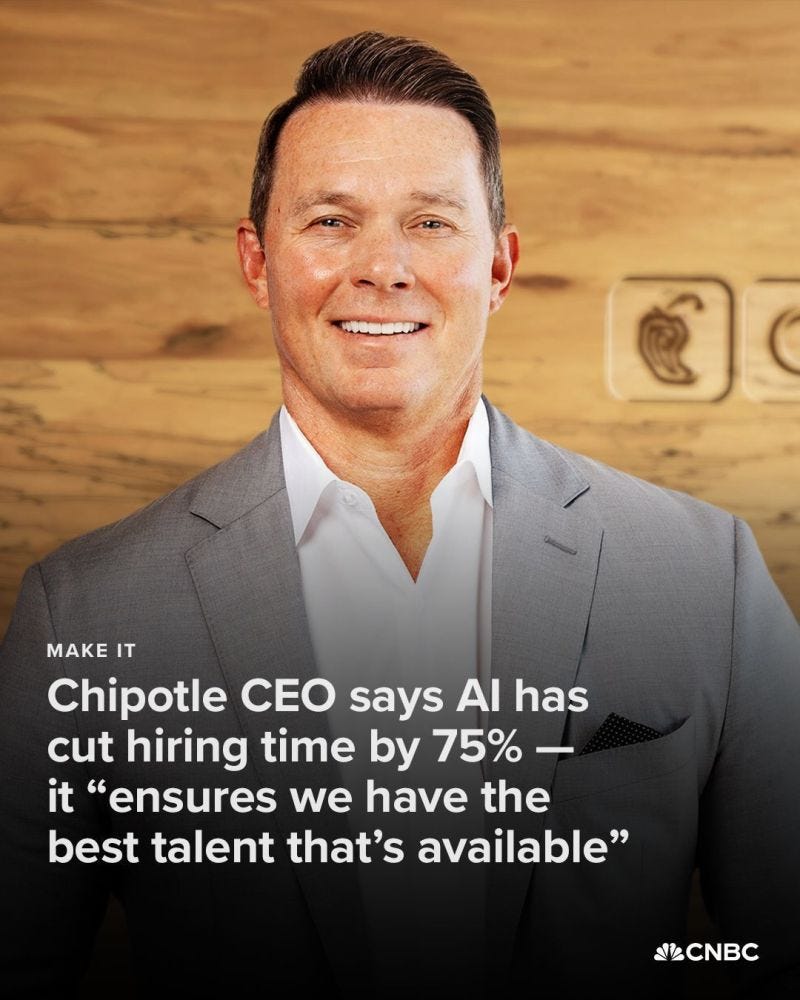
The early beneficiaries aren’t neighborhood bistros. They’re high-volume machines where a fractional gain compounds fast. Yum Brands has been expanding voice AI in Taco Bell drive-thrus and talking openly about pushing AI deeper into operations through its Byte platform. (Yum) Papa John’s expanded a partnership with Google Cloud to use AI for personalization and delivery optimization—because when you have a massive digital funnel, even small improvements pay. (Papa John’s International) Chipotle rolled out a conversational AI hiring platform (“Ava Cado”) precisely where it saves manager time and reduces friction at scale.
And even the poster child for scale, McDonald’s, is a useful cautionary tale: it ended its IBM drive-thru AI order-taking test in 2024. (Restaurant Business Online) Not because the idea was dumb, but because restaurants are brutal environments for anything that can’t handle edge cases, noise, accents, and human behavior at speed.
That’s the pattern hiding behind the hype. Chains benefit first because they already have what AI needs: cleaner data, standard workflows, capital for experimentation, and the organizational patience to survive failed pilots. When AI works there, it doesn’t look like science fiction. It looks like incremental improvements that become enormous at scale.
Most independents do not live in that house.
Their “data warehouse” is a POS dashboard, a couple of panicked Excel files and an accountant who emails once a month. For years, many of us were sold systems on credit-card rates instead of product depth. We fell for it—twice. We jumped to EPOS and later to Lightspeed because the processing looked sharp on paper. The software felt like it had been designed by clever engineers and bankers who have never, in their lives, tried to run a Saturday double or done an inventory count. We got cheaper rates and more chaos. That’s a bad trade when your margin for error is a couple of busy weekends.
This is how technology quietly widens the gap. Chains buy a brain; independents buy a cheaper calculator.
The more interesting story is what’s happening under the radar: a wave of products that actually feel like they were built for operators, not just for head offices and pitch decks.
On the analytics side, tools like Tenzo, ClearCOGS and Lineup.ai all attack the same boring but vital problem: you cannot run a modern restaurant on vibes alone. None of this is glamorous. There are no robot waiters in the marketing. But if you’re running three or five locations without a data team, software that quietly says “order less of this, prep more of that, and cut one server from Wednesday” is the difference between feeling in control and drowning.
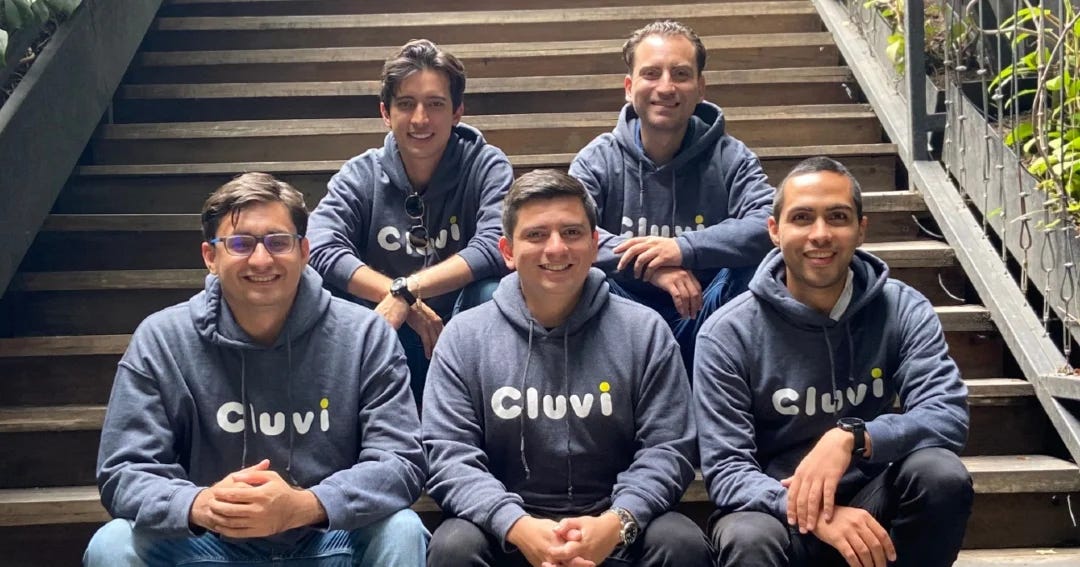
On the guest side, Latin America is quietly ahead of the curve. Cluvi, a Colombian-born platform, turns the humble QR code into an operating system: digital menus, ordering, payment, reservations, delivery, marketing and analytics in one place. A neighborhood taquería can suddenly A/B test its menu and pricing with a level of discipline that used to require a strategy team. Cluvi now has an AI agent called Otto, built to turn guest behavior into actions, not just analytics. That’s the direction I’m watching: not AI that explains the business, AI that moves it.
Then there is the unglamorous operational middle—the part of the business where most AI conversations go to die. Here I’m increasingly obsessed with tools that start from the premise that frontline teams are the main character, not an afterthought. Camillion, for instance, began in retail but feels tailor-made for multi-unit food: it connects store-level POS data, day-to-day task management, photo and video checklists, promotion execution and incident reporting in a single mobile-first platform. It doesn’t scream “AI”. It just turns WhatsApp chaos into structured information—exactly the kind of information a model can learn from.
And this is where I’ve become cautiously optimistic—because I’m starting to see builders who get it.
Recently I met with Jason Solomon and Dave Gordon from Foodstack.AI. They’re raising capital to do what most restaurant “AI” products only pretend to do: bring real AI applications into F&B that respect the constraints of the business. The intent—at least philosophically—is the right one: take messy restaurant reality and turn it into something a small operator can actually use. And their ambition goes beyond restaurants—more “dirt to plate” than POS-to-payroll.
But here’s the uncomfortable question: will it work?
Not because the models aren’t good enough. The models are fine. The graveyard is implementation.
Restaurants are a hostile environment for software. The data is messy. Staff turns over. Wi-Fi drops. The POS breaks at the worst moment. Every vendor promises “easy onboarding,” and then asks for six months of perfect inputs you don’t have. That’s why those ROI stats matter. “AI didn’t work” usually means “AI didn’t survive contact with the workflow.”
Which brings me to the part of AI everyone is starting to whisper about—usually right before they ruin the conversation with jargon: agentic AI.
Strip the buzzword away and the idea is simple. Most restaurant software stops at telling you what’s happening. Agentic systems are designed to do something about it.
This matters because insight has never been the bottleneck. Time is.
I can look at a report. I can read a forecast. I can even agree with it. What I usually can’t do—between service, staffing gaps, vendor calls and broken equipment—is act on it consistently. That’s where most “AI ROI” quietly dies.
This is why tools like TimeShark are interesting. We use it, and it works—not because it’s magical, but because it handles a job restaurants are uniquely bad at doing while the room is on fire: answering the phone. TimeShark positions itself as a 24/7 voice AI that can help guests book, modify, and cancel reservations, including through an official OpenTable integration.
That’s the quiet promise of agentic AI in restaurants: not smarter insights, but fewer little operational tasks that require a human to remember, chase, repeat, and clean up.
It’s also where a lot of ambitious AI companies will fail. Acting inside restaurant workflows means touching real systems and real humans—reservations, staffing, payments, compliance, guest expectations—all the messy edges where software usually breaks. That’s why Gartner’s forecast is worth taking seriously: over 40% of agentic AI projects getting scrapped isn’t a model problem; it’s a friction problem. Gartner
Here’s the line in the sand I keep coming back to.
If an AI tool can’t plug into the systems you already live in (POS, reservations, payroll, inventory), it won’t last. If it doesn’t fit the way service actually happens—fast, messy, interrupted—it won’t get used. And if the incentive is backwards—if it measures the staff instead of helping the staff—it will turn into surveillance, and everyone will find a way around it. Restaurants don’t need another dashboard. They need fewer things to remember.
Give a sharp independent a POS that really functions as an “OS.” Toast is a good example of how AI quietly compounds: it’s layering AI into things like menu classification and benchmarking so insights work across messy real-world menus. Then add a forecasting layer that talks to it. Then add a forecasting layer that talks to it, plus tools that tighten frontline execution, and finally, agentic tools that take real work off managers’ plates.
That’s when the math flips. You start to see a five-location group with the analytical reach of a regional chain.
Right now, AI is still mostly a power-up for the already powerful. The question I find myself returning to, night after night, isn’t “Will AI change restaurants?” It’s this:
How much more dangerous does a small, ruthless operator become once the software finally starts working for them, not just for their card processor?
Disclosure: The founders of Cluvi and Camillion are friends of mine. I’m including them here not because of that, but because I genuinely think they’re pointing restaurant tech in the right direction. I’ve tested most of the tools I mention here, but I’m not yet using them all at scale—for the same reason most independents hesitate: the opportunity cost of getting implementation wrong is very real.
If you know a piece of software that actually makes life easier for real operators—or you’re building one yourself—I want to hear about it.
Send it my way: info@founderandplumbers.com or https://www.linkedin.com/in/luisematab/.